%20(1).png)
Not Every Child Wants to Sit and Talk: How Creative Counselling Can Help Children Feel Heard

Sometimes, the deepest healing doesn't happen sitting opposite someone in a quiet room.
Sometimes it happens with muddy boots, bare feet on cool grass, a football being kicked around, or while drawing a picture that says everything words can't.
As parents, we often imagine children's counselling looking a certain way. Sitting in chairs. Asking questions. Talking about feelings.
But many children simply aren't wired that way.
For some, sitting still feels overwhelming.
Too much eye contact.
Too much pressure.
Too many expectations.
That doesn't mean they don't need support.
It simply means they need support that meets them where they are.
Behaviour Is Communication
One of the biggest misconceptions I hear is:
"They're just being difficult."
But behaviour is rarely "just behaviour."
Children communicate through behaviour long before they can explain what's happening inside.
You might notice:
Increased anxiety
Withdrawal from family
Anger or frustration
Low confidence
Friendship difficulties
School avoidance
Emotional outbursts
Difficulty regulating emotions
These behaviours are often signs that something underneath needs understanding rather than punishment.
That's where children's counselling can make such a positive difference.
Rather than trying to change behaviour, we begin by understanding what the behaviour is trying to communicate.
When Sitting in a Room Feels Too Much
Not every child feels comfortable opening up in a traditional counselling room.
For some children, being outside removes the pressure.
That's exactly why I created Creative Trails.
Creative Trails offers a different approach to supporting children's emotional wellbeing.
Instead of sitting opposite one another, we walk.
We notice.
We explore.
We might:
Walk through nature
Kick a football around
Complete creative activities outdoors
Use mindfulness exercises
Chat naturally...
Or simply enjoy quiet moments together.
Without pressure.
Without expectations.
Children often begin talking when they no longer feel like they're expected to.
Nature has a wonderful way of helping children feel calmer, more regulated and more able to process difficult emotions.
Sometimes the conversation happens naturally.
Sometimes it doesn't.
Both are perfectly okay.
Healing doesn't always need words.
Why Creative Counselling Works
When people hear the word counselling, they often imagine talking.
But talking isn't the only way children communicate.
In creative counselling, children can express themselves through:
Art
Drawing
Storytelling
Role play
Drama
Games
Imaginative play
Therapeutic activities
Sometimes a drawing says more than a conversation ever could.
I've worked with children who couldn't explain their worries with words but could show them through creativity.
Creative counselling allows children to process emotions in ways that feel natural and safe.
There is never pressure to have all the answers.
Every child moves at their own pace.
That's exactly how it should be.

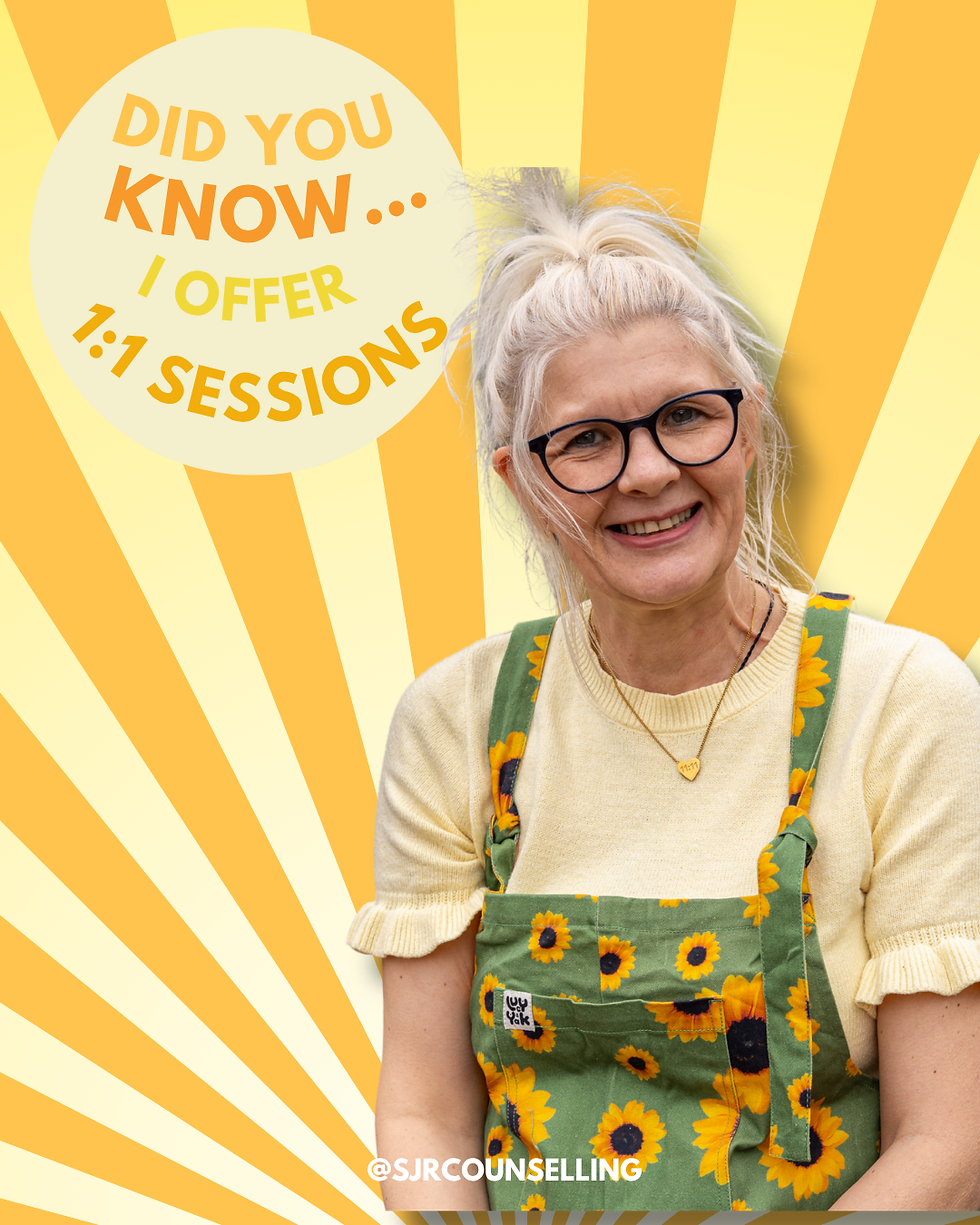
1:1 Children's Counselling
Alongside Creative Trails, I offer 1:1 children's counselling for young people aged 6–19 years.
People often ask why I continue supporting young people beyond 18.
Because turning eighteen doesn't suddenly make life's challenges disappear.
The move between children's and adult services can feel overwhelming, and many young people find themselves needing continued support during this transition.
Every child deserves somewhere they feel:
✔ Safe
✔ Heard
✔ Understood
✔ Accepted
My role isn't to "fix" children.
It's to help them understand themselves.
To build confidence.
To develop healthy coping strategies.
To create a space where they know they don't have to carry everything on their own.
Supporting Your Child at Home
Sometimes you know your child needs support...
But you're not quite ready to book counselling.
That's completely okay.
Support doesn't always begin with a counselling appointment.
Sometimes it begins with learning.
Listening.
Playing.
Connecting.
That's why I've created a range of free resources to help families begin supporting emotional wellbeing at home.
You'll find:
Shared journals
Mindfulness colouring pages
Creative activities
Emotional wellbeing guides
Practical tools for parents
These gentle resources help children express themselves naturally while giving parents simple ways to strengthen connection.
Sometimes those small moments become the beginning of much bigger changes.

How Do You Know If Your Child Might Benefit From Counselling
Every child is different.
There isn't a checklist.
But you may notice your child:
Seems more anxious than usual
Has become withdrawn
Struggles with friendships
Worries constantly
Finds school difficult
Has experienced bullying
Is struggling after family changes
Finds it difficult to manage emotions
Appears less like themselves
Parents often tell me:
"I just knew something wasn't quite right."
That instinct matters.
You know your child better than anyone.
What Families Tell Me After Counselling
One of the greatest privileges of my work is hearing from families after they've completed their counselling journey.
One parent shared:
"We felt like we'd lost our kind, funny and loving son... now he's more or less back to his usual self."
Another said:
"My child always felt comfortable and his anxiety has improved since his sessions."
Others have shared:
"Sam was absolutely excellent with our son."
"My daughter looks forward to every session."
"Sam has made my son feel better about himself."
No two journeys are the same.
But one thing many families describe is watching their child gradually become more confident, more settled and more able to manage life's challenges.
Those moments remind me why I do this work.
Frequently Asked Questions
What age do you work with?
I support children and young people aged 6–19 years.
Does my child have to talk?
Not at all.
Creative counselling allows children to communicate through activities, creativity, games and play if talking feels difficult.
What is Creative Trails?
Creative Trails combines counselling, movement, nature and creativity to create a relaxed environment where children often feel more comfortable expressing themselves.
Do you offer online counselling?
Yes. I offer both online and in-person sessions depending on what best suits your child.
How do I know if counselling is right?
If you're unsure, the best place to start is simply having a conversation.
Ready to Take the Next Step?
If you've been reading this and quietly thinking,
"This sounds like my child..."
Please know you don't have to figure everything out alone.
Whether you're interested in:
Children's counselling
Creative counselling
Creative Trails
Support for teenage mental health
Emotional wellbeing support
Parent guidance
I'd be happy to have an informal chat about what might be the best next step for your family.

Comments